
Publications
Books, articles, reviews, and translations, with texts available where possible.
Books
Lettres d’ailleurs: Vertiges d’une âme au bord d’elle-même
A literary meditation, in letters dealing with religious life in the West and in discussion with the world beyond the academy.
Une philosophie en archipel: Moralistes français et la philosophie
This essay in French analyzes the philosophical impact of the use of fragments and aphorisms ( formes brèves ) in the writings of the French moralists. Their fragments and aphorisms shape a genuine philosophical movement that this book is the first to characterize — an alternative to continuous thought, philosophizing “in archipelago,” from Pascal to Cioran.
Peer-Reviewed Articles
Being an Island: From Presence to Meaning in Teresa of Cartagena
Teresa de Cartagena (ca. 1425 – after 1478) was a disabled nun who faced a tripartite predicament as an author: deafness, gender, and her lineage within a Jewish convert family in medieval Spain. Regrettably, scholarship has tended to encapsulate her in a three-walled box (literature, affectivity, mysticism) in which medieval women’s spiritual writings in the vernacular are siloed. Against the prevailing interpretative model of her writing, which is based on enclosure and spatiality, I advocate for a paradigm shift toward a dialectic of absence/presence that underscores the pervasive nature of Teresa’s intellectual concerns and aligns more faithfully with the actual experience of deaf people. Within this perspective, this article seeks to retrieve the depths of Teresa’s intellectual aspirations, recognizing her not merely as a literary figure but also as a theologian and a Bible scholar. I also argue that Teresa is a mystic, and an intellectual one, whose mysticism has more affinity with the revelation of the rational and the enlightenment of the understanding than with the darkening of the mind before the inexpressible. Taking her intellectual vocation with the utmost seriousness, the present account aspires to reposition Teresa not simply as a marginalized writer but as a theologian of the marginalized: the first Spanish woman exegete and theologian, and the first proponent of a theology of disability. Awarded the 2024 Vagantes Paper Prize and the 2026 Tikva Frymer-Kensky Memorial Prize.
Keywords: Teresa de Cartagena; theology disability; Spanish mysticism; Castilian Literature; Feminist Literature.
Does God’s Providence Know Particulars? How Thomas Aquinas’s Commentary on Job Engages Jewish and Islamic Debates
This study examines the historical originality of Thomas Aquinas’s (c. 1225–1274) Expositio in Iob ad litteram , revealing that it is a self-claimed literal exegesis of Scripture that breaks with the tradition of interpretation of the book of Job initiated by Gregory’s Moralia and carried forward by the Carolingians. Following Maimonides, Thomas mobilizes the biblical text of Job to address concerns that emerged from philosophical currents beyond the Latin Christian West. At stake is the Jewish and Islamic question of whether God may possess knowledge of particulars, and more broadly the problem of God’s interaction with singulars within the Peripatetic depiction of reality that Thomas partly adopts. In the Super Iob , Thomas constructs a distinct paradigm in which divine providence and divine knowledge are articulated, allowing scriptural milestones to chart the course of his reflection. This paradigm is based upon the depiction of God’s relationship to the world not primarily as a creator but as a governor and judge, whose providence extends to the most particular details of reality, including singular evils, to judge them.
Cioran on Time: Falling from Nietzsche
This contribution endeavors to excavate Cioran’s metaphysics of time as emerging from a critique of Nietzsche’s view(s) of eternal return. Thereby, I argue against reducing Cioran to a self-contradictory and destructive thinker with stylistic qualities but on the margins of philosophical debates, particularly those on the question of time. To retrieve Cioran’s understanding of time, my method is to assemble his disordered aphorisms under a Nietzschean angle in order to unearth Cioran’s intimate spiritual journey on the question of time. I conclude that if Cioran’s coherence has eluded scholarly investigation, it is because his stance is intricately intertwined with his secretive and agnostic theological quest. To develop a better understanding of his metaphysics, I introduce and advocate for a “wandering paradigm” in order to deconstruct what I refer to as the “sedentary paradigm” derived from the nihilist or Nietzschean interpretation.
Keywords: Cioran, time, eternity, Nietzsche, mourning, hell.
From Medieval Will to Power to Racism: A Study of Ortega y Gasset and the Middle Ages
How a medieval genealogy of the will to power is refracted through Ortega y Gasset’s reading of the Middle Ages.

The Ascendancy of Soul’s Whoness: How Ibn Sīnā Upended Ancient Greek Paradigms on Human Soul
In contemporary literature, the apparent lack of coherence in Ibn Sīnā’s (d. 1037/427) metaphysical insights, specifically on the human soul, has rendered it arduous to delineate his proper intellectual originality in a systematic form. This study excavates a foundational tenet of his theory regarding individual human souls. In The Book of Healing ( Kitāb al-shifāʾ ), particularly within its Metaphysics ( Kitāb al-ilāhiyyāt ), I contend that he ascribes metaphysical precedence to existing humans in their individuality — what I refer to as whoness — over essences and intellectual notions, the realm of whatness ( māhiyyah ). Contrary to the late Platonist framework, on the one hand, the Baghdadi philosopher assigns the individual human soul a higher status than essences and universals in terms of oneness, existence, and truth; on the other, he refrained from endorsing the Aristotelian hylomorphic theory and its portrayal of instantiated universals. Moreover, this realm of whoness, enshrouded by ontological mystery, incorporates some metaphysical notions initially developed for the divine paradigm.
Critical Articles
The Contours of a Distinctive Metaphysics: Al-Fārābī’s Book of Letters
... Ulrich Rudolph considers it a propaedeutic work (Rudolph 2022, 7). The fact that, in the Enumeration of the Sciences (Iḥṣāʾ al-ʿulūm), logic is presented as a prerequisite to philosophy, while this model seems no more operative here; or the more detailed account than what is found in the Book of Religion (Kitāb al-milla), may nevertheless suggest a later stage of composition... Moreover, the presupposition of a fully developed logical corpus, the maturity of the articulation between language and being, and the broader historical reflections all suggest, in my view, a relatively late period of composition—though, one might add, not among his last writings, the Political Regime and the Virtuous City, to which he never refers (Mahdi 1969, 34)...
Se dépêtrer de l’individualisme libidinal — Compte rendu critique de Mark Hunyadi
Mark Hunyadi expounds how the influence of the ethics of rights unfolded from the emergence of medieval nominalism: the will was established as the dominant faculty of humans, safeguarding their freedom, and instituting a nominalism of individual rights ill-equipped for the climate and digital challenges. A new era for the individual, he argues, will be opened by the discovery of “communalities of conviction” ( communs de conviction ), such as the mind, to be protected as we protect a seabed. His argument is clear, thought-provoking, and inspiring — yet two fundamental critiques resist it: the historical reconstruction verges on conceptual anachronism and overlooks the Cartesian rupture; and the proposed solution remains conditioned by the very ethics of rights from which it sought to depart.
Keywords: nominalism, individualism, will, natural rights, digital, mind, communality, medieval philosophy.
Reviews
Review: Western Monastic Spirituality: Cassian, Caesarius of Arles, and Benedict , ed. R. Haight, A. Pach III, and A. Avila Kaminski
An accessible introduction to Western monastic spirituality, gathering primary texts from three classic figures — John Cassian (d. ca. 435), Caesarius of Arles (d. 542), and Benedict of Nursia (d. 547) — with an introduction on their historical context and a concluding essay engaging spirituality in the present day.
Editions & Translations
Mémoire des hommes et des livres ( Memoria hominum et librorum )
Other Publications
The Indelibility of Sexual Abuse: In Search of a Voice that Endures
« Pour lui, l’islam était une religion de la raison » : hommage à l’islamologue Claude Gilliot
Introduction to E. Willocx, Journal d’une confinée en 9 m²
In Preparation
De-individuating Proclus? Toward a Cyclical Collective-Evolutive Paradigm of Individual Identity
Exploring the notion of individual identity in premodern times necessitates confronting a spectrum of philosophico-theological interrogations that emerge from the fundamental question: what distinguishes one human being from another? I propose a collective-evolutive model to retrieve Proclus’ and Eriugena’s views on individual identity. Within this paradigm, the individual identity of the human being was not consistently qualified as immutable, singularly bestowed at birth; instead, it was perceived as a character with a propensity to evolve, increase, or decrease, received within and through a harmonious collective whole.
The Agnostic Theologian: Emil Cioran’s Archipelagic Thought
A book-length argument that Cioran, despite his disdain for systematicity, covertly develops a coherent — nearly Platonic — metaphysical vision beneath his fragmentary style.
Review of Gilbert Markus, Presence and Absence: God as “Nothing” in Christian Tradition
Earlier Research & Theses
Avicenna’s Account of the Individual Soul and Its Transmission in High Scholasticism (Late 12th–13th Century)
This paper centers on Ibn Sīnā’s (ca. 980/370–1037/427) Latin corpus, known as the Avicenna latinus , pursuing a twofold purpose. First, I aim to establish the coherence and consistency of Avicenna’s theory on the individuation of the human soul, nuancing the prevailing scholarship that characterizes it as bifurcated or self-contradictory. Second, this study seeks to evaluate the legacy of this theory within Latin Christianity, specifically during the classical period of scholasticism (late 12th–13th century).
Surpassing Human Nature: The Notion of Theōsis in Eriugena
Eriugena’s treatment of theōsis illustrates, more than any other part of his system, how he articulates Eastern and Western traditions. His anthropology, which shapes the whole scheme of the Periphyseon, culminates in his elucidation of theōsis. In Eriugena, no concept can be analyzed in isolation; all are in a perpetual interplay that dynamizes his thought. Studying theōsis therefore requires showing how the idea relates to his insights on ontology, epistemology, and cosmology — a threefold analysis that reveals its centrality in his system, although this preeminence is neglected in Eriugenian scholarship.
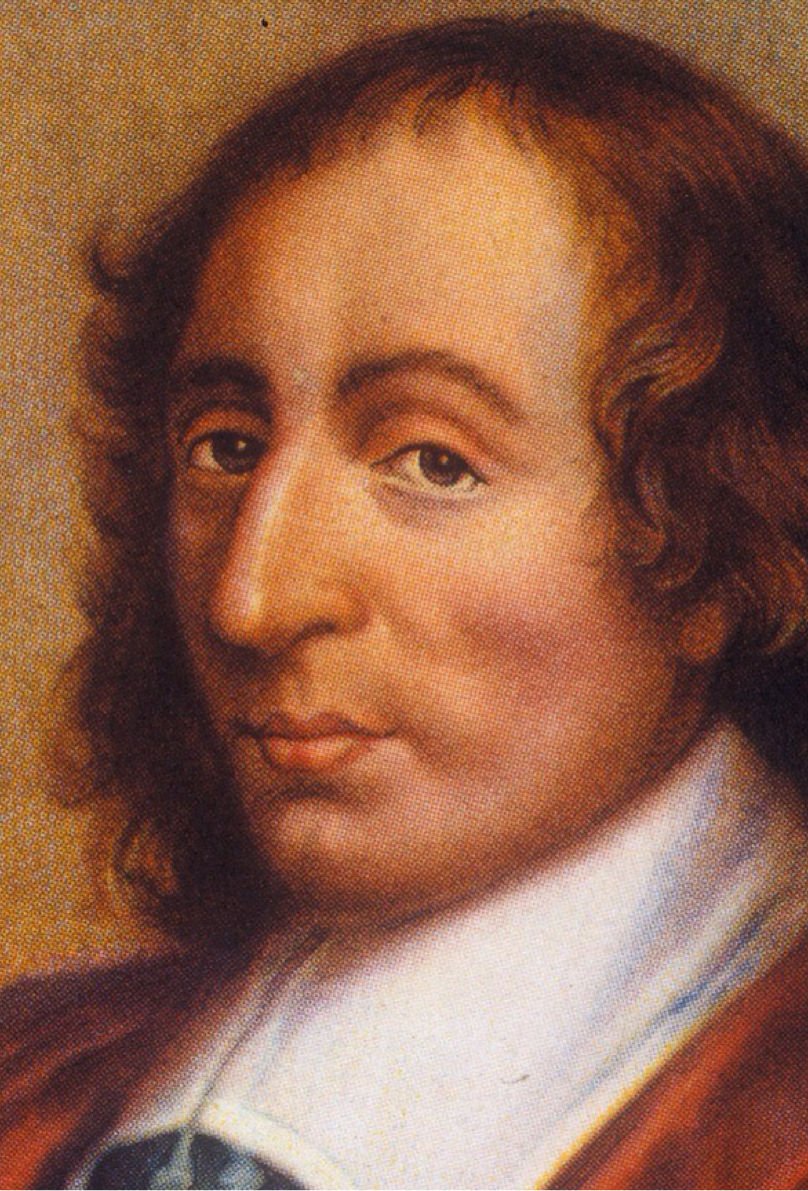
Pascal’s Understanding of “le moi”
This text aims to clarify the philosophical signification of the opaque concept of “le moi” created by Pascal in his chef-d’œuvre, the Pensées . Introduced with no definition, this concept has had a tremendous influence on the history of philosophy; yet, along with the difficulties of translation, its legacy often leads to misunderstandings of Pascal’s intention. At the crossroads of Cartesian thought and Augustinian doctrine, “le moi” proves a key to apprehending the thought of the genuine polymath that Pascal was — and an emblematic example of the risk of conceptual anachronism in the history of philosophy.
Keywords: Pascal, self, moi, the Ego, Descartes, love, amour-propre.